News & Resources
Guides

Returns management is the part of retail and ecommerce nobody loves, but everyone has to deal with.
Consumer research shows that 76% of shoppers say free returns influence where they shop. Over two-thirds of retailers say they’re prioritizing upgrades to their returns capabilities, and 93% say fraud and return abuse are already a significant issue. In other words: returns are simultaneously necessary to offer and tricky to control.
Nevertheless, with the right approach, returns can be simpler, more predictable, and far less costly. This guide breaks down what returns management actually is, how it works, and how to turn a painful process into one that supports your customers and your margins.
Returns management is the system behind everything that happens when a product comes back—how customers send items in, how those items are handled, and what you ultimately do with them.
A return usually follows this path: a customer starts the process, the product makes its way back to you, and someone checks its condition. From there, you decide its next step: restock, refurbish, donate, recycle, or dispose. Each choice affects your costs, inventory accuracy, and the value you can recover.
Returns also reveal patterns. If certain products keep coming back, it might signal a fixable issue such as unclear descriptions, sizing problems, packaging damage, or a quality concern.
Every return looks a little different depending on the brand, the channel, and the product, but the overall cycle is pretty straightforward.
A customer starts the return.
They might click a button in a portal, use a drop-off location, or walk into a store. The important part is that the process feels easy. The harder it is, the less likely they are to shop with you again.
The product comes back to you.
Behind the scenes, this involves carriers, labels, tracking, and sometimes consolidation points.
You inspect it.
Someone on your team checks the item’s condition and decides whether it’s new, lightly used, damaged, or unsellable. This one decision determines the item’s value from this point forward.
You choose its next step.
Maybe it goes back into stock. Maybe it gets cleaned or repaired. Maybe it heads to liquidation, donation, or recycling. Good returns programs have clear rules for each path so teams can move quickly without guessing.
You update inventory and process the refund.
It’s a small and crucial step. You need inventory as up-to-date as possible.
And ideally, you learn something.
If certain products keep coming back for the same reason, your returns data becomes a guide for improvements.
Once a return makes its way back to your warehouse or 3PL, everything hinges on inspection. This is where you figure out what the product actually is now, whether that’s new, used, damaged, or something else entirely, and what should happen to it next.
Returns arrive in all kinds of conditions. The inspection step answers a few simple questions:
Fast, consistent inspection is one of the biggest levers for protecting margin. The longer items sit unprocessed, the faster they lose value.
After inspection, every item should follow one of a few defined paths.
1. Restock it as new
If the product is untouched or in perfect shape, it goes right back into sellable inventory.
This is the best outcome with full value recovered.
2. Refurbish or recondition
Some items aren’t new, but they’re far from worthless. Refurbishment keeps products out of landfills and recaptures revenue you’d otherwise lose.
This is common with:
3. Resell through secondary channels
When something can’t be sold as new or refurbished, there are still options. These channels help you recover value quickly:
4. Donate, recycle, or responsibly dispose
For items that can’t be resold, responsible end-of-life options matter — financially and environmentally. Many brands use donation networks or sustainability partners to handle this.
The key to a strong returns process is consistency. These five practices make the biggest impact for brands of any size.
Most customers decide whether to buy based on how easy it is to return something. A clear online flow or prepaid option removes friction and reduces support tickets. When shoppers don’t have to hunt for instructions, they trust the brand and they’re more likely to buy again, even after a return.
Returns touch multiple teams: customer service, warehouse staff, finance, transportation. Centralizing the workflow and automating steps like label creation, refund triggers, marketplace integrations, and inventory updates, cuts errors and speeds the entire process.
Create simple categories like restock, refurbish, resell, donate, recycle. When teams follow the same rules every time, you recover more value and avoid inconsistent decisions that confuse inventory or finance.
Transportation determines how fast returns get back into your system and how much it costs. Use carrier options that match your volume and product type, whether that’s prepaid labels, designated drop-off networks, or consolidation programs. Optimizing routes, drop-offs, and your overall network will help drive costs down.
Returns affect everything downstream: stock accuracy, replenishment, forecasting, and customer promises. Make sure your systems sync in real time. When returns feed directly into your WMS, OMS, or 3PL operations, you avoid overselling.
Returns get a bad reputation because they do come with real costs. You’re paying for shipping, handling, inspections, labor, packaging, and sometimes disposal. If you add it all up, a return can easily cost more than the original outbound shipment.
But here’s the part many brands overlook: returns aren’t just a cost center. They’re also one of the clearest windows you have into customer behavior and one of the fastest ways to improve margins without raising prices:
You also have the chance to:
Every retailer, brand, and ecommerce company deals with returns. High-growth business models expect them. The real win is creating a returns operation that protects your margins, keeps customers happy, and helps you spot problems before they escalate.
You don’t need the most sophisticated tech to run a great returns program, but you do need the basics to talk to each other. Returns fall apart when systems aren’t synced.
A simple returns portal
A good portal guides customers through the return without confusion. It gives them clear options, pulls the right product data, and sets expectations for timing. At the same time, it gathers the information your team needs, like reason codes and order details.
A warehouse system that updates inventory
Your WMS is what keeps returned items from disappearing into the abyss. It should track each return from the moment it’s scanned, carry it through inspection, and trigger the correct next step.
Integrations that eliminate double work
Returns touch almost every part of an operation: ecommerce platforms, warehouse systems, accounting, customer service, carriers. When these systems are connected, one scan can trigger everything else: inventory updates, customer notifications, refund approvals, and reporting.
Real-time data
Every return tells you something. When your systems capture that data cleanly, patterns start to appear. Maybe a packaging style leads to more damage. Maybe a carrier mishandles specific products. Good reporting turns returns into insight.
Fraud protection
Simple tools that compare package weight, track frequent return patterns, or require photos in certain cases, can significantly cut down on abusive returns. The goal isn’t to make returns harder. It’s to make sure your policies protect your business while still giving good customers a smooth experience.
Why many brands lean on a 3PL for this
Building your own returns tech stack is expensive and time-consuming. A good 3PL already has the tools, integrations, and workflows in place. You plug into what they run every day: the carrier connections, the inspection processes, the inventory tracking, the reporting. For brands growing quickly or expanding into retail and omnichannel fulfillment, this saves an enormous amount of time and avoids costly mistakes.
Our teams handle the inspections, sorting, inventory updates, and routing decisions that protect value. And because every brand’s products, channels, and challenges are different, we build the process around what you need.
Whether your returns come from stores, ecommerce, marketplaces, or all three, we make the backend feel organized. The result is a returns operation that supports your growth instead of slowing it down.
If you’re ready for returns to feel less reactive and more under control, we can build that with you.
What is returns management in ecommerce and retail?
Returns management is the process of handling products that customers send back, from starting the return to inspecting the item, updating inventory, issuing refunds, and deciding whether the product should be restocked, refurbished, resold, or recycled. A good returns management process protects your margins, keeps customers happy, and helps you learn from return patterns.
What is reverse logistics, and why is it important?
Reverse logistics is everything that happens after a product moves backward through the supply chain: returns, repairs, refurbishing, repackaging, and resale. It matters because poor reverse logistics lead to slow refunds, inaccurate inventory, and lost value. Strong reverse logistics help you recover more revenue, cut waste, and improve customer loyalty.
How can I reduce my return rate without hurting sales?
Most brands reduce returns by preventing the root problems that cause them: unclear product descriptions, inaccurate sizing, weak packaging, and inconsistent outbound quality. Returns fall even further when you use better tracking, offer exchanges, and make the returns experience simple instead of frustrating.
What are the most common reasons customers return products?
The top drivers of returns include wrong size or fit, damaged products, incorrect items being shipped, unmet expectations from unclear product pages, and quality issues. In retail, returns often come from compliance errors like wrong labels, wrong counts, or missed delivery windows. Analyzing these patterns helps brands fix issues at the source.
What technologies help streamline returns?
Returns portals, WMS integrations, automated refund workflows, barcode scanning, and real-time inventory updates are the essentials. Brands also use analytics tools to identify high-return SKUs, fraud filters to reduce abuse, and 3PL integrations to unify data across ecommerce, retail, and marketplace channels.
How do returns affect my inventory accuracy?
Returned products can easily cause ghost inventory if they’re not scanned, inspected, and dispositioned quickly. When your warehouse system is integrated with your online store or ERP, inventory adjusts in real time.
Can a 3PL handle my returns management for me?
Many brands rely on a 3PL because returns can be labor-heavy, time-sensitive, and costly to build internally. A strong 3PL manages inspections, grading, restocking, refurbishing, secondary channel routing, reporting, and system integrations.
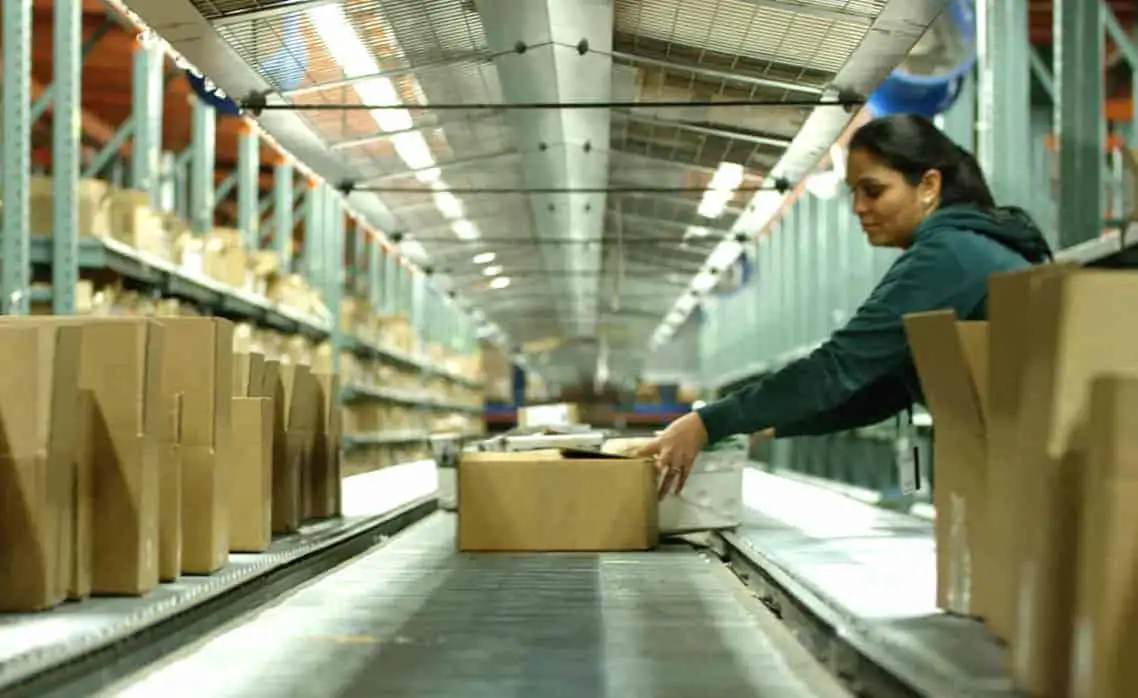
When it comes to supply chain performance, the margin for error is razor thin. Customers expect orders to arrive quickly, accurately, and...
+ Read more
FRANKLIN, IN | September 10th, 2025 – Legacy SCS announced that it has been selected by IPS Corporation, a global leader in Water...
+ Read more
When GForce Arms launched in 2020, the mission was simple but ambitious: deliver affordable, reliable firearms with the speed and...
+ Read more